
PCGC 2024 (Day 2) - PRECISION CARE AND AI: TRANSFORMING HEALTH
Dr Clara Ngoh: Data Science and AI in Management of Cardiometabolic Diseases
This talk will cover literature review, which ones reported in literature have had clinical impact, examples of AI projects in NUHS with cardiometabolic use cases, Future state
Dr Andrew Wu: Harnessing Digital Twins for Enhanced Diabetes Management in Primary Care
As diabetes prevalence continues to rise, primary care physicians face increasing challenges in delivering personalized and effective management strategies. This presentation introduces the innovative concept of digital twins in diabetes care—a cutting-edge approach that simulates patients' health status and disease using computational biology and artificial intelligence. By harnessing multi-dimensional data from electronic health records and clinical chemistry, digital twins enable clinicians to predict disease progression, support treatment selection, and personalise patient care plans. Join us to explore how digital twin technology can transform diabetes management in primary care settings.
Keynote The Future of Medical Diagnostics by A/Prof Eric Yap
As medical diagnostics continue to evolve rapidly, the integration of advanced molecular biology, automation, and artificial intelligence is transforming healthcare. This lecture will explore the future landscape of medical diagnostics, focusing on innovations that are set to revolutionize disease detection and patient care.
Dr Chng Seo Yi: An Introduction to Computer Vision and Deep Learning for Clinicians
Computer vision is a field of artificial intelligence where the computer can learn and recognise images. Through this introductory talk, clinicians will be introduced to the concept of deep learning and neural networks. The use of computer vision in healthcare will be showcased, such as in the detection of colorectal polyps and in the diagnosis and classification of diseases on patient photographs and on radiology scans.
A/Prof Daniel Ting: Latest Advances in Myopia Care and Developments of AI Applications for Foundation Models
Dr. Daniel Ting, a leading retinal surgeon and AI researcher, will explore the transformative role of artificial intelligence (AI) in global healthcare, particularly ophthalmology. He will highlight how AI is revolutionizing the detection and management of eye diseases such as diabetic retinopathy, glaucoma, and age-related macular degeneration. By leveraging AI tools like the Singapore Eye Lesion Analyser, will also addresses the critical shortage of specialists in underserved regions, offering efficient screening solutions to prevent and identify chronic diseases like diabetes, glaucoma, dementia and even cardio vascular disease. All underscore the importance of developing safe, ethical, and responsible AI applications, emphasizing rigorous testing for AI biases and inaccuracies before implementation. He will advocate for building robust clinical infrastructures to support AI-driven solutions globally. Finally, he will share his vision of using cutting-edge AI technologies to scale innovations, create intellectual property, and position Singapore as a global leader in health tech.
Dr Andrew Makmur: AI in Healthcare: Enhancing Precision Care While Preserving the Human Touch
Artificial Intelligence (AI) is poised to revolutionize healthcare, offering unprecedented opportunities to improve patient outcomes, streamline processes, and enhance precision care. This presentation will explore the transformative potential of AI in healthcare while emphasizing the critical importance of maintaining the human element in medical practice.
Ms Sheryl Ng: AI Advances in Eye Screening for Patients in Primary Care and Potential Role of AI for Automation
In this session, Sheryl will discuss the transformative impact of artificial intelligence (AI) on eye screening in primary care, particularly in light of Singapore's increasing diabetic population. She will highlight recent advancements in AI technology that enhance the efficiency and accuracy of eye assessments, enabling early detection of diabetic retinopathy and related conditions. Drawing from her experience with general practitioners and nurses, Sheryl will demonstrate how AI can automate routine examinations, streamline workflows, and improve screening rates among diabetic patients. Attendees will learn about the practical applications of AI in eye care, potential implementation challenges, and the future of integrated care models that prioritize patient health. Join her for an insightful exploration of how AI is poised to revolutionize eye screening in this critical healthcare area.
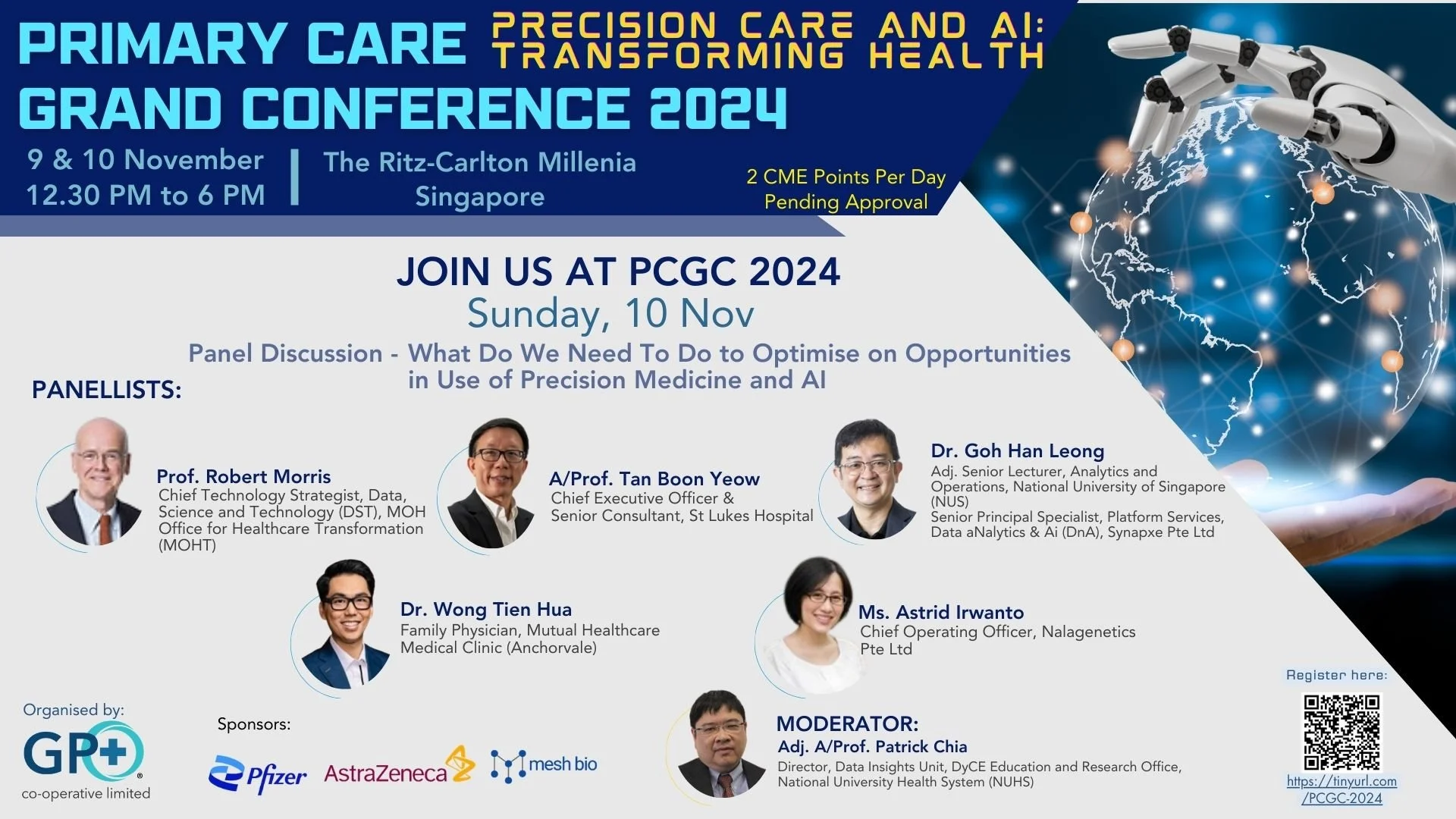
What We Need To Do to Optimise on Opportunities in Use of Precision Medicine and AI